
FCSC – Federal Competitiveness and Statistics Center

Generic selectors
Exact matches only
Search in title
Search in content
Post Type Selectors
post
page
wpcode
elementor_library

Media Center

DATA FOR A BETTER FUTURE

Press Release
UAE advances 3 places, ranking 7th globally in 2024 World Competitiveness Report
Asset 11
18 Jun 2024
DUBAI, 18th June, 2024  His Highness Sheikh Mohammed bin Rashid Al Maktoum, Vice President, Prime Minister and Ruler of Dubai, stated that the UAE, under the leadership of President His Highness Sheikh Mohamed bin Zayed Al Nahyan and through the dedicated efforts of its people, continues to improve its standing each year, achieving higher ranks across various global competitiveness indicators.
His Highness Sheikh Mohammed bin Rashid said, "In one of the most important global competitiveness reports issued by the International Institute for Management Development in Switzerland, the UAE moved up three places, reaching seventh place globally. The UAE is also among the top ten globally in more than 90 key and sub-indicators in the 2024 World Competitiveness Report."
His Highness said, "Our thanks and appreciation go to all the teams in the government, economic, and development sectors who work with one spirit to achieve a single goal: the progress of the United Arab Emirates."
Building on last year’s achievement of entering the top 10, the UAE made a notable leap in the 2024 World Competitiveness report, advancing three positions to 7th place worldwide, ahead of Norway, Iceland, Japan, Canada and Finland.
The UAE performed exceptionally across various pillars of the report, ranking 2nd globally in Economic Performance, 4th in Government Efficiency, 10th in Business Efficiency.
Mohammad bin Abdullah Al Gergawi, Minister of Cabinet Affairs, stated, "The UAE’s continuous presence at the forefront of this significant report reflects its status as one of the world’s most competitive economies. The exceptional vision and wise leadership of President His Highness Sheikh Mohamed bin Zayed Al Nahyan and the guidance of His Highness Sheikh Mohammed bin Rashid Al Maktoum, Vice President, Prime Minister and Ruler of Dubai, have made the UAE a pioneering developmental model adaptable to ongoing global changes. This demonstrates the efficiency of the UAE government system, the flexibility of its business environment, and the readiness of its infrastructure."
Commenting on the results, Hanan Mansour Ahli, Managing Director of the Federal Competitiveness and Statistics Centre, praised the integration and governance of real-time data and statistics exchange between federal and local entities. Ahli said, "This achievement is due to dedicated teams committed to implementing the vision and directives of the government of the future, reinforcing the UAE’s leadership. These results reflect the solid principles of the competitiveness culture in the UAE.”
Top Rankings in Key Indicators
The World Competitiveness Report classifies the countries based on four main pillars and 20 sub-pillars encompassing 336 competitive indicators across various economic, administrative, and social fields, including government efficiency, education, and innovation. In this year’s report, the UAE advanced in all four main pillars.
The UAE ranked among the top 10 globally in over 90 key and sub-indicators. The UAE ranked 1st globally in 11 indicators including industrial disputes, labour force (%), employment (%), and household consumption expenditure- real growth.
The UAE secured 2nd place globally in 9 indicators, including tourism receipts, females in parliament, labour force growth, adaptably of government policy, and absence of bureaucracy.
The UAE ranked 3rd globally in 6 indicators including collected capital and property taxes, immigration laws, management of cities and percentage of government budget surplus.
The UAE also achieved 4th place in 12 indicators including consumer price inflation, long-term unemployment, international experience, overall productivity (ppp), labour regulation, and the balance of commercial services and employment in the public sector.
The UAE also achieved 5th place in 13 indicators including GDP (PPP) per capita, quality of air transportation, energy infrastructure, graduates in sciences, start-up procedures, unemployment legislation, foreign highly-skilled personnel, national culture, unemployment rate and tax evasion.
First published in 1989, the IMD World Competitiveness report is a comprehensive annual report and a global benchmark on the competitiveness of countries.
It offers insights into trends, benchmarking, and a wealth of statistics and survey data derived from extensive research. The report analyses and ranks countries based on their ability to manage competencies for sustainable long-term value creation.

The FCSC Hosts IMF for Workshop on Advanced Practices in Measuring Inflation and CPI Statistics
Asset 11
03 Jun 2024

In a strategic initiative to advance the UAE’s statistical capabilities, the Federal Competitiveness and Statistics Centre (FCSC) hosted an expert technical mission from the International Monetary Fund (IMF). This mission conducted an advanced workshop focused on the application of the latest international practices and technologies in calculating inflation rates and the Consumer Price Index (CPI). The workshop brought together leading experts in inflation statistics and CPI from local statistical centres across the UAE.
The objective was to integrate latest statistical tools, innovative data sources, and the use of scanner data to enhance the accuracy, timeliness, and comprehensiveness of national statistics. This initiative underscores the commitment to leveraging sophisticated statistical infrastructure to inform policy-making, strategic planning, and national development.
In its effort to continue adhering to the highest international standards and methodologies for statistical indicators, the Federal Competitiveness and Statistics Centre emphasised that fostering international cooperation is paramount, especially as the UAE prepares to serve as a member of the United Nations Statistical Commission from 2025 to 2028. The goal is to innovate and standardise national methodologies in partnership with local statistical centres, while enhancing the use of advanced technologies and modern practices in statistical data production. This strategic focus ensures that the UAE’s statistical outputs are both robust and globally competitive.
His Excellency Mohammad Hassan, Executive Director of Statistics and Data Science Sector at the FCSC, stated: "Our successful partnership with the International Monetary Fund underscores our unwavering commitment to establishing a world-class statistical system. By leveraging global expertise and applying top standards and practices, we aim to enhance the efficiency and capabilities of the UAE’s national statistical system. Additionally, we embrace the latest technologies in data science and artificial intelligence to produce unified Emirati statistics that align with the visionary leadership and strategic goals of the country”.
Ms. Fayeqa Abdulla, Director of Economic Statistics at the Federal Competitiveness and Statistics Centre, highlighted the importance of continuously investing in developing statistical capabilities to keep pace with global advancements in utilizing modern techniques in data science for collecting, analyzing, and producing official statistics in the UAE, in collaboration with local statistical centers.
This workshop builds on the momentum of a recent national workshop hosted by the FCSC on measuring and calculating trade-in-services indicators, conducted in collaboration with the International Monetary Fund and esteemed international organizations such as the United Nations Conference on Trade and Development (UNCTAD) and the Organization for Economic Cooperation and Development (OECD). 
This initiative reflects the UAE’s unwavering dedication to forging robust partnerships and engaging with international and regional organizations. By actively promoting knowledge and experience exchange, the UAE aims to adopt best practices in digital transformation and ensure the application of global standards in data collection and statistical methodologies.

National Committee on SDGs Discusses Enhancing Partnerships with International Organisations and Government Officials
Asset 11
28 May 2024
The National Committee on Sustainable Development Goals (SDGs) discussed strengthening global partnerships and cooperation to achieve development goals in meetings with representatives of international organisations and government officials from several countries. These discussions were part of the committee’s delegation’s participation in the ninth annual UN Multi-stakeholder Forum on Science, Technology, and Innovation for the Sustainable Development Goals (STI Forum), which recently took place in New York.
The theme for the STI Forum 2024 was: ‘Science, technology, and innovation for reinforcing the 2030 Agenda and eradicating poverty in times of multiple crises: the effective delivery of sustainable, resilient, and innovative solutions’. The forum served as a vital platform for global leaders, decision-makers, and experts to exchange knowledge and explore opportunities for cooperation and effective partnerships.
The forum aimed to unify efforts and develop relevant scientific and innovative technologies in pursuit of achieving SDGs, while highlighting the crucial role of science and technology in building a prosperous future and confronting global challenges effectively.
His Excellency Abdulla Nasser Lootah, Chairman of the National Committee on SDGs, emphasised the significance of international forums in fostering meaningful cooperation between organisations and governments. He noted that the forum presented an invaluable opportunity to exchange visions and share ideas, thereby accelerating the achievement of development goals.
Lootah stated that the UAE has achieved tangible milestones by employing technology and innovation tools, integrating them into its public policies and future strategies to advance the process of achieving sustainable development goals. He underscored the UAE’s commitment to sustainable development across economic, social, and environmental dimensions, considering it a primary pillar in its future directions and visions. This commitment is pursued through innovative methodologies, clear visions, and strategic plans aimed at benefiting society.
During the participation in the STI Forum, the UAE delegation held several meetings with ministers, officials of international organisations, experts, specialists and representatives of parties concerned with the SDGs globally. 
During a meeting with H.E. Jelena Begović, Minister of Science, Technological Development, and Innovation of Serbia, the UAE delegation reviewed the pioneering role of the UAE in supporting the achievement of the UN Sustainable Development Goals 2030, as well as innovative transformational projects across various sectors such as development, investment, and education. The attendees stressed the importance of scientific research in the progress of countries and societies, as well as in achieving SDGs. They also emphasised the necessity of enabling researchers to access sources of funding for scientific research.
The delegation also met with H.E. Pedro Conceição, Director of the Human Development Report Office at the United Nations Development Programme (UNDP), during which the two sides discussed the significance of exchanging global knowledge and expertise for development and prosperity, particularly in the realm of artificial intelligence mechanisms and solutions, as well as in addressing the challenges posed by climate change. The attendees emphasised the importance of strengthening efforts to achieve SDGs to ensure the advancement of human development and enhance the quality of life in societies.
The National Committee on SDGs discussed with H.E. Juan José Martínez Badillo, Chief of United Conference on Trade and Development (UNCTAD), New York office, the development of effective models to enhance areas such as foreign investment and food security in countries with economies similar to the UAE. They also emphasised the importance of intensifying efforts and coordination with relevant entities in these countries to provide necessary data and statistics for implementing innovative solutions and high-impact initiatives to accelerate the achievement of the SDGs globally. 
At a meeting with H.E. Doreen Bogdan-Martin, Secretary-General of the International Telecommunication Union (ITU), the delegation reviewed the ‘Global Digital Rights Charter’, which is concerned with bridging the digital divide worldwide and ensuring an open, free, and secure digital future for all, as it leverages scientific and technological developments to identify and address global challenges effectively.
The STI Forum centred its discussions on the Sustainable Development Goals, whose progress will be assessed during the 2024 High-Level Political Forum on Sustainable Development, scheduled from July 8 to 17, 2024. Particularly, attention will be given to Sustainable Development Goals 1, 2, 13, 16, and 17.
During the forum sessions, speakers underscored the importance of utilising tools and mechanisms, including scientific research and its applications, to establish a strong foundation. They emphasised the need to support, enhance, and accelerate mechanisms for implementing effective measures at both national and international levels, thereby advancing sustainable development goals and fostering societal prosperity.
The forum, held at the invitation of H.E. Paula Narváez, President of the UN Economic and Social Council (ECOSOC), was overseen by the United Nations joint working group dedicated to science, technology, and innovation for the achievement of sustainable development goals.

Within the «Sustainability Journeys». Afforestation Week launched in Dubai schools
Asset 11
24 May 2024
​​General Secretariat of the National Committee for Sustainable Development Goals organized a new trip as part of the "Sustainability Trips" campaign, which was launched last year as part of the "Sustainability Initiatives" in support of the Year of Sustainability, announced by His Highness Sheikh Mohamed bin Zayed Al Nahyan, President of the UAE, may God protect him, under the slogan "Today for Tomorrow", as part of the UAE government’s efforts to enhance community awareness of sustainability and the importance of achieving it, and to support the country’s achievements and successes in the 17 goals. Global to ensure the prosperity and quality of life of society.
The General Secretariat of the National Committee for Sustainable Development Goals, in cooperation with the Knowledge and Human Development Authority and Dubai Municipality, and with the participation of Dubai schools, launched the "Afforestation Week" campaign, which will continue until May 28, by planting seedlings in Dubai schools organized by Dubai Municipality.
Abdullah Nasser Lootah, Assistant Minister of Cabinet Affairs for Competitiveness and Knowledge Exchange and Chairman of the National Committee for Sustainable Development Goals, stressed that the sustainability travel initiatives are continuing to implement their strategy and achieve their goals in the UAE. It will contribute to the integration of our joint efforts at the state level, to motivate community members to adopt a conscious and sustainable lifestyle, for a brighter and more prosperous future.
Aisha Abdulla Meeran, Director General of the Knowledge and Human Development Authority (KHDA) in Dubai, said: "We are delighted to participate in this wonderful initiative, in collaboration with our colleagues from supporting institutions and the educational community in Dubai, and we encourage educational institutions in Dubai to join such pioneering initiatives, which contribute to raising awareness among our students and society about sustainability and ways to preserve the environment in the UAE in order to ensure a prosperous future for future generations."
Initiative In the same context, Dawood Al Hajri, Director General of Dubai Municipality, said: "The initiative reflects Dubai Municipality’s strategic efforts to preserve natural resources and expand cultivated green spaces, by following the best international standards and practices, which contribute to enhancing the sustainability of the environmental system in Dubai, improving air and soil quality, in addition to beautifying the city, while providing the best levels of quality of life for its residents, in a way that supports the municipality’s objectives in building a sustainable system for the environment and resources. Naturalism makes Dubai more attractive and sustainable every day."
He added: "Dubai Municipality has played an effective role in the cultivation and afforestation work over the past years, as it planted 170,339 trees in 2021 to reach 185,000 trees by the end of last year, which is a reflection of its intensive efforts to increase the per capita share of green spaces in balance with the population growth and urban expansion of the emirate."
It is worth noting that the National Committee for Sustainable Development Goals was formed with the aim of implementing the Sustainable Development Goals 2030, aligning the UAE’s priorities with the UN goals, and exchanging experiences with local and international partners, to expand the circle of active participants in the implementation of the United Nations Agenda for Sustainable Development Goals.

The National Committee on SDGs Discusses UAE’s Efforts in Monitoring Indicators for Achieving Development Goals
Asset 11
06 May 2024
​The National Committee on Sustainable Development Goals (SDGs) emphasised the need to intensify efforts and accelerate implementation to achieve the desired progress in  the 2030 sustainable development agenda nationally. This entails closely monitoring progress regarding the 17 goals 231 indicators, capitalising on opportunities, and fostering cooperation between the government and private sectors.
The committee also discussed its mandate and responsibilities, highlighting its crucial role in translating the UAE’s directives and bolstering its involvement in international endeavours towards achieving global sustainable development goals.
This came during the inaugural meeting of the National Committee for Sustainable Development Goals under its new formation, led by His Excellency Abdulla Nasser Lootah, Deputy Minister of Cabinet Affairs for Competitiveness and Knowledge Exchange, Chairman of the National Committee on SDGs.
The Committee’s members include HE Brigadier General Dr. Rashid Al Dakhri, Deputy Director of the General Department of Strategy and Performance Development at the Ministry of Interior; HE Maria Hanif Al-Qassim, Assistant Undersecretary for the Policy and Economic Studies at the Ministry of Economy; HE Hassan Obaid Al Mheiri, Assistant Undersecretary for Planning and Educational Services Sector at the Ministry of Education; HE Ahmed Al Nasser, Assistant Undersecretary of National Human Resources Development at the Ministry of Human Resources and Emiratisation; HE Dr Hussain Al Rand, Assistant Undersecretary for the Public Health Sector at the Ministry of Health and Prevention; HE Nasser Ismail, Assistant Undersecretary of Social Welfare at the Ministry of Community Development; HE Alia Abdul Rahim Al Harmoudi, Assistant Undersecretary for the Sustainable Communities Sector at the Ministry of Climate Change and Environment; HE Hanan Mansour Ahli, Director of the Federal Competitiveness and Statistics Centre (FCSC); HE Nawal Alhanaee, Director of Future Energy Department at the Ministry of Energy & Infrastructure; HE Rashid Al Humairi, Director of the Department of Development and International Cooperation at the Ministry of Foreign Affairs; and Shatha AlHashmi, Advisor at the Government Experience Exchange Office, Committee Rapporteur.
The National Committee for SDGs undertakes several main tasks, including: coordinating with relevant entities to align and review national policies, strategies, and targets with the sustainable development goals; building and strengthening national capabilities to achieve sustainable development goals and addressing challenges through partnerships locally and globally; preparing national reports on the country’s progress and efforts to achieve SDGs; and coordinating with authorities to compile and publish related data on SDGs at the UAE level.
Abdulla Lootah emphasised that the UAE’s leadership prioritises the attainment of sustainable development goals, adopting a vision centred on accelerating their achievement and enhancing international participation in these endeavours. He noted that the announcement made by His Highness Sheikh Mohamed bin Zayed Al Nahyan, President of the UAE in 2024, as an extension of the Year of Sustainability declared in 2023, reaffirms the UAE’s steadfast commitment in this area.
Lootah stated that since its formation, the National Committee for Sustainable Development Goals has consistently aligned with the country’s directives and national initiatives aimed at realising the SDGs. Additionally, it has actively contributed to enhancing the UAE’s involvement and leadership in supporting international initiatives towards these objectives. He emphasised the significance of the committee’s efforts in expanding project initiatives, launching new programmes, and intensifying actions to monitor progress in achieving development goals at the national level, thereby accelerating their fulfilment across various sectors.
During the meeting, the members of the National Committee for Sustainable Development Goals discussed the role of the Committee’s General Secretariat and the responsibilities of its members. They received an update on the progress of the UAE in achieving the SDGs and discussed the Committee members’ role in advancing these goals and accelerating the pace of work towards their achievement.
The meeting reviewed the efforts of the General Secretariat since the committee’s new formation, including its organisation of introductory and technical meetings in collaboration with the Federal Competitiveness and Statistics Centre. These meetings focused on discussing the national Data plan for SDGs and reviewing the achievements of ministries and government entities in implementing their indicators.
The attendees discussed the outcomes of the progress report on the adoption of the national plan for sustainable development data, as well as the mechanisms for monitoring goal achievement and conducting periodic reviews with technical work teams to assess progress levels. They also addressed the key initiatives launched and facilitated by the General Secretariat of the National Committee. 
Additionally, the meeting reviewed the outcomes of the SDGs in Action Forum, held as part of the World Governments Summit activities, the SDG Young Leaders Programme, and the UAE’s participation in two Voluntary National Reviews assessing global sustainable development goal achievement levels. They also discussed the readiness to submit the voluntary review in 2026 and preparations to participate in the Science, Technology and Innovation Forum for SDGs and the High-Level Political Forum on Sustainable Development in the United Nations.
The National Committee on SDGs was established to implement the 2030 Sustainable Development Goals at the national level. Its objectives include aligning the UAE’s priorities with those of the United Nations, as well as facilitating the exchange of experiences among local and international stakeholders and partners. This aims to broaden the pool of active participants in implementing the United Nations’ agenda for SDGs.

The UAE Joins United Nations Statistical Commission As Member
Asset 11
05 May 2024
The United Nations has selected the UAE as a member of the Statistical Commission, one of the eight technical committees affiliated with the Organization’s Economic and Social Council, for its next session from 2025 to 2028. This membership marks a significant milestone for the country, being the first of its kind since the Commission’s founding in 1946.
The country’s selection for membership in the United Nations Statistical Commission aligns with efforts to enhance the UAE’s participation in international initiatives. It also provides an international platform for sharing the UAE’s advanced models, thereby enhancing the efficiency and accuracy of statistical analysis worldwide. Additionally, it supports the establishment of digital platforms for data exchange.
The Statistical Commission, composed of 24 countries elected by the United Nations Economic and Social Council, stands as the apex of the global statistical system. Serving as the primary entity uniting senior statisticians and experts, it holds responsibility for decision-making regarding international statistical activities, as well as for developing statistical standards and ensuring their implementation on both national and international levels.
H.E. Hanan Mansour Ahli, Director of the Federal Competitiveness and Statistics Centre (FCSC), affirmed that the UAE’s election to membership in the United Nations Statistical Commission reflects the nation’s leadership in digitalising the statistical system and its prominent global standing. This achievement underscores the wise leadership’s commitment to bolstering the country’s active involvement in enhancing government operations overall, as well as strengthening the statistical sector’s capabilities both nationally and internationally.
Hanan Ahli highlighted that the statistical system in the UAE, supported by local statistical centres, harnesses technology, digital solutions, and artificial intelligence techniques. This transformation has evolved the system from a mere collector of information and data to an integrated platform supporting strategic planning and nurturing innovative solutions to address future challenges. This process relies on a scientific and practical methodology in data analysis.
She pointed out that the UAE’s membership in the United Nations Statistical Commission will serve as a crucial platform for sharing distinguished Emirati experiences and exchanging statistical knowledge with countries possessing exemplary expertise in this domain.
Mohammed Hassan, Executive Director of the Statistics and Data Science Sector at FCSC, emphasised that the UAE’s election as the only Gulf country to the United Nations Statistical Commission reflects its effective role in developing solutions for utilising data to support the achievement of global sustainable development goals. This is evidenced by its embrace of the UN’s Regional Hub for Big Data for Sustainable Development platform, which aims to enhance the capabilities of the statistical community in the Middle East and North Africa region and leverage big data and artificial intelligence techniques to advance the statistics sector.
The UAE’s membership in the United Nations Statistical Commission supports its contribution to leading global statistical thought. It enables effective participation in decision-making for global statistical activities, fosters the development of statistical standards, concepts, and methods, and offers opportunities to learn about the best international statistical practices, standards, and methodologies. Moreover, it facilitates the adoption and adaptation of best practices developed by countries worldwide in the field of statistics, in collaboration with international organisations.
The country’s membership amplifies efforts to showcase the UAE’s achievements in developing the statistics and data sector, share its distinguished Emirati experience in this field, and raise awareness of the role of artificial intelligence solutions, laws, and legislation in advancing statistical work for future endeavours.

National Committee on SDGs Organizes ‘Road to Sustainability’ in Collaboration with Furjan Dubai, Careem Bike, and Carrefour
Asset 11
04 Apr 2024
The UAE’s National Committee on SDGs organized a new round of the ‘Road to Sustainability’ campaign, which was initially launched last year. This initiative is part of the broader efforts to support the ‘Year of Sustainability’ guidelines announced by HH Sheikh Mohamed bin Zayed Al Nahyan, President of the UAE. Under the slogan ‘Today for Tomorrow,’ the campaign aims to enhance community awareness about sustainability and its significance, as well as to bolster the country’s achievements in the 17 Sustainable Development Goals (SDGs).
This year’s campaign, held in collaboration with "Furjan Dubai," "Careem Bike," and "Carrefour," was launched at the Al Khawaneej Jogging Track in Dubai. Representatives from "Careem Bike" and "Carrefour," along with members of the UAE’s National Committee on SDGs and several members of the UAE community, participated in the event. "Careem Bike" provided free bicycles to the participants, while "Carrefour" supplied environmentally friendly gifts.
His Excellency Abdulla Nasser Lootah, Deputy Minister of Cabinet Affairs for Competitiveness and Knowledge Exchange and Chair of the UAE’s National Committee on SDGs, stated: "The campaign embodies the UAE government’s commitment to encouraging individuals to embrace a sustainable lifestyle, which contributes to creating a better world for future generations. The National Committee on SDGs aims to achieve the UN’s sustainable development goals by fostering long-term partnerships with voluntary community institutions in the country, thereby advancing the goals in the UAE and worldwide."
Alia Al Shamlan, Founder and Director General of the "Furjan Dubai", expressed pride in participating in the "Road to Sustainability" campaign. She emphasized Furjan Dubai’s dedication, since its establishment in 2021, to actively engage and enhance human and social interaction among members of the UAE community through initiatives supporting sustainability.
Sami Amin, Senior Director of Operations at Careem, commented: "We are pleased to contribute to the Year of Sustainability initiatives and enhance the public’s experience of the ‘Road to Sustainability’ by providing free bicycles from Careem. Since its launch in February 2020, Careem has helped reduce carbon dioxide emissions by more than 3,750 tons, equivalent to the emissions of 1,051 vehicles annually, thereby supporting the achievement of sustainable development goals, particularly Goal 7, which ensures access to clean energy at affordable prices."
Amin added: "Careem Bike, launched in 2020, has become the largest bicycle sharing program in the region, with over 217 bicycle parking stations in Dubai and Abu Dhabi. The service has become the preferred choice for sustainable transportation and recreation among residents and tourists, thanks to its affordability and accessibility."
Bernardo Perloiro, Chief Operating Officer – GCC at Majid Al Futtaim – Retail, remarked: "We are pleased to collaborate with the UAE’s National Committee on SDGs to raise awareness among the UAE community. At Majid Al Futtaim, we consistently seek to contribute to events aligned with our sustainability strategies, aiming to become Net Positive in water and carbon by 2040."
It is noteworthy that the UAE’s National Committee on SDGs was established to implement the Agenda 2030 for Sustainable Development, align the UAE’s priorities with the UN’s goals, and exchange experiences with partners locally and internationally to broaden the circle of active participants in the UN Agenda for Sustainable Development.

The Federal Competitiveness and Statistics Centre Participates in the GCC Economic Competitiveness Forum to Establish a Unified Framework
Asset 11
08 Dec 2024
The Federal Competitiveness and Statistics Centre (FCSC) participated in the first Gulf Cooperation Council (GCC) Economic Competitiveness Forum, organised by Qatar’s Ministry of Finance in collaboration with the World Economic Forum.
The forum brought together representatives from GCC member states with the aim of establishing a unified framework to enhance economic competitiveness, expand areas of cooperation, and build future partnerships. The goal was to improve the GCC’s standings in global competitiveness reports and indices. During the event, the FCSC shared insights into the UAE’s institutionalised approach to managing global competitiveness, through an operational framework overseen by the National Competitiveness Committee.
The forum featured two key sessions: "The Future of GCC Competitiveness" and "Methodologies of Global Reports." These sessions highlighted the role of GCC competitiveness centres in shaping strategies and policies to bolster the region’s competitive capabilities.
Participants also discussed the Global Competitiveness Report issued by the World Economic Forum, which assesses the performance of 141 countries across 103 indicators, grouped into 12 main pillars. These include macroeconomic stability, infrastructure, innovation capacity, and business dynamism.
Hanan Ahli: Achieving GCC Aspirations for global Leadership in Competitiveness Indices
Her Excellency Hanan Mansour Ahli, Managing Director of the Federal Competitiveness and Statistics Centre, stated that the UAE’s participation in the forum reflects the depth of partnerships among GCC member states and the UAE leadership’s commitment to advancing collaborative efforts. These endeavours aim to achieve shared ambitions and position the GCC as a leader in global competitiveness indices.
She noted that the FCSC, operating within an organisational framework led by the National Competitiveness Committee, has developed an innovative and modern model. This approach enables the professional management of the competitiveness portfolio, fostering transformative change and realising future aspirations.
It is worth noting that the FCSC monitors more than 22 competitiveness reports issued by international organisations and tracks over 1,350 global competitiveness indicators across critical sectors such as the economy, health, education, and gender balance. The Centre aligns its efforts with global trends that enhance the UAE’s competitiveness, ensuring its appeal regionally and internationally.

The National Committee on SDGs Emphasises the Importance of Investing in Young Talents and Enhancing International Partnerships
Asset 11
13 Nov 2024
His Excellency Abdulla Lootah, Deputy Minister of Cabinet Affairs for Competitiveness and Experience Exchange and Chairman of the National Committee on Sustainable Development Goals, emphasised the UAE’s wise leadership’s commitment to investing in Emirati youth, highlighting the nation’s dedication to equipping young talents with the skills necessary to contribute to shaping the UAE’s future vision and advancing sustainable development efforts. H.E. noted that the National Committee on SDGs has actively empowered youth to engage in strategic planning and decision-making processes, pinpointing their pivotal role in implementing sustainability agendas both nationally and globally.
This came during the fourth committee meeting, attended by Her Excellency Maria Hanif Al Qassim, Assistant Undersecretary for Policies and Economic Studies at the Ministry of Economy; His Excellency Nasser Ismail, Assistant Undersecretary of Social Welfare at the Ministry of Community Development; Her Excellency Eng. Alia Abdul Rahim Al Harmoudi, Assistant Undersecretary for Sustainable Communities at the Ministry of Climate Change and Environment; His Excellency Dr. Hassan Obaid Al Mheiri, Assistant Undersecretary for Policies and Economic Studies at the Ministry of Education; and Her Excellency Hanan Ahli, Managing Director of the Federal Competitiveness and Statistics Centre (FCSC).
In addition to, Her Excellency Bérangère Boell-Yousfi, United Nations Resident Coordinator in the UAE; Eng. Nawal Yousef AlHanaee, Director of Future Energy at the Ministry of Energy and Infrastructure; His Excellency Maywand Jabarkhyl, CEO of the Fatima bint Mohamed bin Zayed Initiative (FBMI), members of the Youth Advisory Council for Sustainable Development Goals, and representatives from the Ministry of Interior attended the meeting.
The meeting reviewed the achievements of the Youth Advisory Council for Sustainable Development Goals in its second term and its pivotal role in supporting decision-making, thus ensuring inclusive policies to align with the aspirations of future generations.
Youth Advisory Council Achievements
The Youth Advisory Council for Sustainable Development Goals highlighted its key accomplishments in promoting national efforts toward sustainable development. The council launched several initiatives, including "Knowledge Without Borders," which shared the best sustainability practices with over 27 countries, and "Art and Culture for SDGs" which established more than six partnerships to enhance the art and culture ecosystem for sustainability. During COP28, the council hosted a series of international dialogue sessions, with the most notable being the "Health and Climate Change Forum." which focused on exploring the future of healthcare and enhancing preparedness for emerging health-related challenges.
National and Global Updates
Bérangère Boell-Yousfi made a presentation to the committee members, summarising key outcomes from the "Summit of the Future" held by the United Nations in New York in September. The presentation focused on international efforts to accelerate sustainable development, emphasising the importance of international and regional cooperation in achieving sustainable development, and the role of data in tracking progress on both the national and global levels.
The committee further discussed updates on the national plan on SDGs, where Her Excellency Maria Al Qassim presented the Ministry of Economy’s sustainability initiatives, including plans for sustainable tourism, circular economy, sustainable financing, and initiatives to encourage the private sector to adopt the sustainability agenda.
Humanitarian Efforts Focused on Sustainability
The Fatima bint Mohamed bin Zayed Initiative team presented the initiative’s achievements, focusing on sustainability and empowering low-income Afghan communities that have faced significant challenges over the past three decades due to wars and natural disasters. The initiative employed over 8,000 Afghans, 70% of whom are women, provided monthly healthcare to over 25,000 people, and enabled 20,000 children to attend school, providing aid to a total of 1.8 million people.
The National Committee on SDGs is responsible for coordinating efforts among entities to align national policies, strategies, and targets with sustainable development goals, fostering and building national skills to achieve these goals, addressing challenges through partnerships at the local and global levels, preparing national reports, and managing the collection and sharing of SDG data across the UAE.

FCSC Promotes Global Partnerships with International Statistical Offices at the BRICS Meeting
Asset 11
11 Nov 2024
The Federal Competitiveness and Statistics Centre (FCSC) participated in the 16th Meeting of Heads of BRICS National Statistical Agencies, held in Kazan, Russia. The meeting comes within the activities of the BRICS Summit, in which the UAE participates for the first time as a member of the BRICS.
Meeting of Heads of BRICS National Statistical Agencies serves as an effective platform for decision-makers, statisticians, and global experts in big data, paving the way for sharing knowledge, exploring collaboration opportunities, and getting acquainted with cutting-edge, statistics-related scientific and innovative technologies. The meeting focused on implementing impactful projects and initiatives to support the ongoing evaluation of emerging global needs.
Hanan Ahli: An Opportunity to Highlight the UAE’s Leadership in Digital Transformation and Statistical Excellence
Her Excellency Hanan Mansour Ahli, Managing Director of the Federal Competitiveness and Statistics Centre, stated that participating in this important event provided an opportunity to build bridges and foster effective partnerships with the National Statistics Offices of the BRICS. Furthermore, it paved the way for developing global and innovative statistical systems, using top-notch, reliable data to showcase the UAE’s pioneering model in digital transformation and the application of state-of-the-art solutions to achieve statistical excellence, support development programmes, and address future needs and challenges.
H.E. Hanan Ahli said that the UAE and its statistical landscape are committed to continuously enhancing the national statistical effectiveness, leveraging modern tools and methodologies to ensure the publication of reliable data on the UAE Unified Numbers, through efficient, adaptable, and agile statistical systems that uphold the highest standards of integrity, while adapting to evolving changes.
"We look forward to building effective partnerships with the National Statistics Offices of BRICS as we approach the activation of the UAE’s membership in the United Nations Statistical Commission, 2025-2028. Our goal is to develop statistical communities, build capacities, and exchange expertise in the fields of statistical governance, the use of big data, and leveraging data science in developing official statistics," she added.
The BRICS Joint Statistical Publication 2024
During the meeting, the "BRICS Joint Statistical Publication 2024", compiled by representatives from the National Statistics Offices of BRICS countries, was launched. It features key economic and social statistics and indices of member countries, such as GDP, inflation rates, price indices, population, employment, and unemployment indicators, etc. Members highlighted that promoting statistical partnerships and cooperation is pivotal to achieving fruitful outcomes in the BRICS statistical activities.
The UAE delegation held bilateral meetings with H.E. Dr. Saurabh Garg, Secretary General of the Ministry of Statistics and Programme Implementation of India, and H.E.  Mao Shengyong, Deputy Commissioner of the National Bureau of Statistics of China. The meetings focused on the development of statistical systems, enhancing the role of statistics and data in future readiness across vital sectors, utilising alternative technologies and AI tools for data collection and analysis to support decision-making and strategic planning.

«Competitiveness and Statistics» organizes a workshop on statistics of trade in services
Asset 11
12 Dec 2023

​The Federal Competitiveness and Statistics Centre organized an intensive national workshop on services trade statistics, in cooperation with experts from the World Trade Organization, the International Monetary Fund, the Organization for Economic Cooperation and Development and the United Nations Trade and Development Organization.

The workshop was attended by experts and specialists in national accounts and trade statistics from government agencies from all around the UAE, including the Ministry of Economy, the Ministry of Finance, the Federal Authority for Identity, Citizenship, Customs and Ports Security, as well as statisticians and economists from local statistical centers in the country.

His Excellency Dr. Thani bin Ahmed Al Zeyoudi, Minister of State for Foreign Trade, stressed that the UAE, thanks to the vision of the wise leadership, continues to strengthen its international position in services trade, as it ranked 12th as the largest exporter of services in the world during 2022 according to the World Trade Organization, while the value of UAE services exports reached AED 567 billion, equivalent to $155 billion, according to the "Trade Profiles" report issued by the organization last October. This report provides key data on the trade of goods and commercial services for 197 countries worldwide.

His Excellency added that the new strategy for services exports recently adopted by the Cabinet will increase the contribution of this vital sector with promising potential to non-oil foreign trade and GDP of the UAE, as the UAE’s service exports are growing at rates faster than the global average, helping to solidify the UAE’s position as a global business hub with an increasingly advanced and high-value economy that relies on services.

Her Excellency, Hanan Ahli, Manager Director of the Federal Competitiveness and Statistics Centre, said that organizing the workshop comes as part of the joint efforts of the Centre, the World Trade Organization, ministries and government entities. These efforts aim to ensure alignment in the methodologies of collecting data related to services trade with the best practices and international standards. This is done to improve the business environment and achieve sustainable economic growth.

UAE is the 1st globally in the Network Readiness Index according to the UN E-Government Survey 2024
Asset 11
25 Sep 2024
The UAE achieved a perfect score of 100 percent in Telecommunication Infrastructure Index (first in the world), the 1st place in the Human Capital Index in Asia and the Arab world, and the  first position in the world in the Content Provisioning and Institutional Framework sub-indices. 
Talal Belhoul Al-Falasi:
 “With these results, we benefit from the achievements of the efforts of the government, and the minds and hands of the people of this generous nation under the vision of our wise leadership."
Majed Sultan Al-Masmar:
“We appreciate the efforts of our partners whether federal or local government entities, or telecommunications service providers (Etisalat & e and du), who have worked together as one national team in the digital transformation journey."
 
Hanan Mansoor Ahli: 
“The results of the UN E-Government Survey reflect the UAE’s effectiveness of the digital government enablers and the integration of data and statistics across various government entities.”
The Telecommunications & Digital Government Regulatory Authority (TDRA) announced that the United Arab Emirates has achieved outstanding results in a number of indicators related to government and digital services as per the United Nations E-Government Survey 2024, which focuses on the role of governments in accelerating digital transformation and artificial intelligence for sustainable development, and providing services that enhance the quality of life of community members.
The UAE in the lead
The report announced by the United Nations Department of Economic and Social Affairs (UN-DESA) indicated that the UAE ranks first globally in the Telecommunication Infrastructure Index (TII), with a full score of 100%. The report also indicates that the UAE advanced 34 points in the Human Capital Index (HCI), moving from 44th to 10th place, and getting placed first in Asia and the Arab world in this index. This result reflects the considerable efforts made towards national competencies in the UAE, and provide them with the necessary skills to navigate the era of accelerated digital transformation and technological shifts. 
The report pointed out that the UAE belongs to the top rated countries in the E-Government Development Index (EGDI), which constitutes the general framework for a set of criteria. The UAE achieved a score of 95%, and advanced two places from what it had achieved in the previous assessment in 2022; thus, maintaining its position on the list of most developed countries in the world. 
Among the results of the report are also the UAE’s full score in the e-government literacy (EGL) index, and the world’s first full score in the content provisioning and institutional framework standards, which are two sub-indices of the Online Service Index (OSI). 
 
A new peak 
His Excellency Talal Belhoul Al Falasi, Chairman of TDRA, praised the results achieved by the UAE in the UN E-Government Survey 2024, which reflects the efforts of various federal and local government entities, saying: “With these results, the UAE has established a new milestone in its journey towards a brighter future, led by His Highness Sheikh Mohammed bin Zayed Al Nahyan, President of the UAE, and His Highness Sheikh Mohammed bin Rashid Al Maktoum, Vice President and Prime Minister of UAE, and Ruler of Dubai, along with the government. Today, we reap the rewards of a track record of efforts and achievements by the minds of the people of this generous country, in order to solidify the foundations of a digital knowledge society and economy, leveraging cutting-edge technologies, particularly AI and other transformative technologies”.
His Excellency affirmed, "The UAE’s progress in digital government is an outstanding model in integrating human creativity with technology to facilitate people’s lives. The UAE government has been proactive in investing in the telecommunications sector as part of a forward-looking vision in line with the directives of the wise leadership. For over more than two decades, major investments have been made in telecommunications infrastructure. This, accompanied by the upskilling of government cadres has reflected on our country’s progress in this vital sector, which represents the basis of sustainability and creating the future." 
One team; one goal
For his part, H.E. Eng.  Majed Sultan Al Mesmar, Director-General of TDRA, stressed that the UAE’s keenness to develop the ICT sector stems from the vision of the wise leadership that this sector is the backbone of development and driver for all other sectors. 
H.E. said, "When it comes to global competitiveness and sustainable development strategies, the Telecommunication infrastructure Index stands out as one of the most important pillars  as it reflects the level of progress of countries in employing future technologies to create the desired future. We are proud that the results of this index placed the UAE at the forefront of the global scene, and we are reaping the fruits of a long journey of pioneership, effective strategies, insightful vision and joint efforts. Today, the UAE has become an inspiring story in the systematic digital transformation, which supports the digital economy and smart cities based on the principles of inclusive government, customer centricity, business continuity and proactivity. If these results have put us on the top globally, we see this as an important incentive for us to continue to implement the strategic motto of Vision 2031, which is to move from one milestone to another." 
H.E. added "Of course, I cannot fail to point out that this index is not the only one in which we have achieved full leadership, as we are today in the first place in Asia and the Arab region in the Human Capital Index, and we have achieved a full score in the e-government literacy sub-index, first in content provisioning and first in institutional framework in the OSI. I would like to point out that these achievements would not have been possible without the spirit of partnership that we shared with federal and local government entities, and  especially with telecom service providers in the country (e& and du). I extend my thanks and appreciation to them all.”
On her part, H.E. Hanan Mansoor Ahli, Director of the Federal Competitiveness and Statistics Centre (FCSC), said, “The results of the UN E-Government Survey 2024 are a reflection of the effectiveness of digital government enablers, and the efficient telecommunications infrastructure that supports Intergovernmental Integration  projects and initiatives. It is also a reflection on the integration of data and statistics, which enhance the implementation of future technologies to ensure government readiness for a sustainable future.”
The UN report highlights TDRA’s efforts to enhance capabilities in digital transformation, and the focus on developing governance and public services by adopting several initiatives. One such initiative being the unified automated chat platform for government services, "U-Ask", which relies on generative artificial intelligence to ensure smooth access to e-government services. Efforts also include the Federal Network (FedNet) initiative, which contributes to enhancing the digital efficiency through AI solutions, and the digital national identity initiative "UAE PASS", which is the first digital national identity for all citizens, residents and visitors, allowing users to access services of local and federal government entities, and other service providers. The UAE also applies best standards and global practices to ensure consistency and accessibility across federal government websites.
The UN-DESA launched its report entitled "e-Government Survey” for the first time in 2003, to be released every two years to monitor the extent of development in digital governments and determine the progress levels in their various tracks. The survey primarily aims to help decision-makers and those responsible for digital transformation to proceed with their plans based on reliable analytics and benchmarks which include government portals, services, content, e-participation, data, etc. regionally and locally. The UN-DESA has been developing its standards in this regard in line with emerging developments and technologies, in order to achieve compatibility between such standards and the SDGs as they stand today.  

Videos

50 Years of Unified UAE Numbers

Asset 11
30 Apr 2026

The UAE … A Leading Competitive Model in Excellence, Innovation, and Future-Making

Asset 11
30 Apr 2026

H. H. Sheikh Mohammed bin Rashid Al Maktoum Visits UAE Statistics Mural

Asset 11
30 Apr 2026

The UAE National Data and Statistics Platform

Asset 11
30 Apr 2026

Non-Oil GDP Grows by 6.1% in the First Nine Months of 2025

Asset 11
30 Apr 2026

Emirati Women’s Day… From Numbers to Achievements, Driven by Your Vision

Asset 11
30 Apr 2026

“RASMI” Initiative

A strategic initiative within the "Unified UAE Numbers" project, which was launched by His Highness Sheikh Mansour bin Zayed Al Nahyan, Vice President, Deputy Prime Minister and Chairman of the Presidential Court.

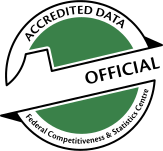
“RASMI” is a mark of accreditation for national data and statistics issued by the Federal Competitiveness and Statistics Centre, across all vital sectors, to create new bridges for the UAE through unified, accurate and consistent data and statistics.

The “RASMI” accreditation mark aims to:

rasmi-popup-dot

Highlight the strength of the Unified UAE Numbers to support the UAE’s global competitiveness journey.

rasmi-popup-dot

Ensure the highest levels of transparency and accuracy in producing national data.

rasmi-popup-dot

Reduce duplication and support mechanisms for integration and coordination between federal and local data-producing entities.

rasmi-popup-dot

Enhance community trust in published national data and statistics.

rasmi-popup-dot

Raise statistical awareness among individuals in society through interactive visual content.

مبــــــادرة "رســـــــمي"

هي مبادرة استراتيجية ضمن مشروع "أرقام الإمارات الموحدة" الذي أطلقه سمو الشيخ منصور بن زايد آل نهيان، نائب رئيس الدولة نائب رئيس مجلس الوزراء، رئيس ديوان الرئاسة، بمثابة علامة اعتماد للبيانات والإحصاءات الوطنية الصادرة عن المركز الاتحادي للتنافسية والإحصاء لكافة القطاعات الحيوية لمد جسور جديدة لدولة الإمارات عبر بيانات وإحصاءات موحدة ودقيقة ومتسقة.

تهـــدف علامــــة اعتمــــاد "رســــمي" لـ:

rasmi-popup-dot

إبـــــراز قـــــوة أرقـــــام الإمـــــارات المـــــوحدة، لدعـــــم مسيـــــرتنــــــا في التنــــــافسيــــــة العــــــالميــــــة.

rasmi-popup-dot

ضمــــــان أعــلى درجــــــات الشـــــفـــــافيــــة والــــــدقــــة في إنتــــــاج لبيــــانــــــات الـــــــوطنيــــــة.

rasmi-popup-dot

دعـــــم آليـــــــات التكـــــــامل والتنسيـــــــق بيــــــن الجهـــــات الاتحادية والمحـــــلية المنتجــــــة للبيانــــــات لتقــــــليـــــــل الازدواجيـــــة.

rasmi-popup-dot

تعـــــزيـــــــز ثقـــــــة المجتمــــــع فـــــي البيـــــــانــــــات والإحصــــــاءات الــــــوطنيـــــــة المنشـــــــورة.

rasmi-popup-dot

نشـــــــر الـــــــوعي الإحصـــــــائي بيـــــــن أفــــــراد المـــــــجتمع عبـــــــر محتــــــوى مـــــــرئي تفــــــــاعلي.